Camino de Santiago: What to Bring
If you're reading this article, you're probably filled with a volatile mix of excitement, performance anxiety, and a slew of questions that keep you awake at night.
Will I make it? What should I pack? What if I get blisters on day two?
Don't panic. If you missed the previous steps, check out my previous articles, where we explored the origins and choices of the various routes.
Today, however, we're getting down to business: here's everything you need to know to prepare your body, mind, and backpack.
How to prepare
Let's face it: you don't need to be an Olympic marathon runner to tackle a Camino, but arriving with a minimum of training will save your knees (and your mood).
Start walking a few weeks before your departure, gradually increasing your mileage. Being physically active will definitely help you along the way. That said, there's no universal rule. I've seen people tackle the trail with no prior training and walk faster than me. I believe motivation and vision are the two true driving forces of the Camino. However, arriving with a basic fitness level can make a huge difference.
However, there is one golden rule that cannot be compromised: buy your equipment well in advance and, above all, TEST it before leaving.
Breaking into new shoes on the first day of hiking is the quickest way to end up with blisters the size of walnuts. Walk in them around town, use them for shopping, and go out with friends. They need to become like a second skin before you set off. I still remember my weekends in Spain, when hiking boots accompanied unlikely dress shirts for aperitifs. And yet, just like that, they began to take the shape of my feet and slowly transform into the travel companions that would travel hundreds of kilometers with me.
What to bring
When you pack your backpack, the temptation is to bring your entire house with you. This is partly due to a modern mentality that pushes us to accumulate items, as if every possible inconvenience requires a ready-made solution.
Spoiler alert: you'll soon learn that much of that accumulation is pointless. And your back will remind you of it.
The theory goes that your backpack should weigh about 10% of your body weight. The reality? Even less. Every single gram counts.
Of course, there's a big difference between packing for cold weather and packing for warm weather. I'll share a strategy that worked for me during spring and summer trips.
So, it's time to play strategically:
Microfiber shirts and shorts , i.e., those garments that dry quickly. For a hike lasting about a month, I brought four shirts and two pairs of pants that zipped into shorts. I also brought a lightweight set to use as pajamas or just for rest. At the end of the day, I immediately washed the clothes I used, and within a few hours they were almost always dry. Otherwise, I secured them to my backpack with clips and cords during the first few hours of walking the next day.
For additional clothing , one per category is more than sufficient: a windbreaker, a hat, a sweater, and so on. Opt for lightweight, technical, or multifunctional fabrics.
Sleeping bag and personal pillowcase. It may seem excessive, but it can save you a lot of trouble. One of the most common fears among pilgrims is bed bugs (I myself have suffered from them). It's impossible to completely eliminate the risk, but using your own sleeping bag on the albergue mattress and a personal pillowcase on your pillow can significantly reduce it.
Walking shoes. The advice here is simple: if you can, don't skimp on quality. There are excellent options, even at affordable prices. I personally tackled both of my Caminos wearing Columbia Redmonds for around €70 and I was very happy with them. I also brought a pair of waterproof sandals, useful both as shower slippers and as walking shoes at the end of the day.
A Camelbak is better than a traditional water bottle. It allows you to drink while walking without having to constantly stop to retrieve the bottle from your backpack (in the long run, the details will make all the difference, trust me).
Bring a small first aid kit with you. A basic one from a pharmacy or Decathlon is more than sufficient. There's no need to fill your backpack with plasters, dressings, or heavy medications: bring the essentials and, if necessary, purchase the rest at pharmacies along the route.
A Swiss Army knife, a lighter, and a few meters of rope can prove very useful. If you're a hypochondriac like me, or simply have an Indiana Jones streak, you can add a portable water filter, an emergency whistle, a compass, and a small reflective mirror. A flashlight, preferably a headlamp, is also practically indispensable (for rummaging through your backpack when everyone else is already sleeping in the dormitory).
Sunscreen, mosquito repellent, and anti-friction cream. Sunscreen should always be used, even when the sky seems innocuous. Anti-friction cream, on the other hand, has been one of my best allies. I applied it every morning on my feet before putting on socks and on areas prone to chafing. My advice is to use it both in the morning and after my evening shower.
As for food , as a vegan, it wasn't always easy to find what I was looking for, especially in some areas of northern Spain, but I never went without food. For this reason, I don't recommend bringing supplies from home. Buy everything along the way, also supporting local businesses. At most, consider taking some supplements to dissolve in water. Before leaving, a pharmacy recommended magnesium and potassium to aid muscle recovery. I'll never know if they actually made a difference, but I didn't suffer any injuries during the trek.

The organization trick: the "backpack within a backpack"
How do you avoid emptying everything onto your hostel bed every time you look for a pair of socks? Use the "backpack within a backpack" method.
Travel organizers, dry bags, or small bags can work wonders. Divide everything by category: one bag for underwear, one for laundry, one for food, and so on (for example, I used Dechatlon mini backpacks).
Having multiple small, organized spaces inside a larger backpack makes everything incredibly tidier and more streamlined.
Practical advice
Wake up at dawn: Leaving early means enjoying the sunrise, avoiding the hottest hours of the day, and arriving at the hostel with greater peace of mind. Many municipal or donated hostels don't accept reservations: first come, first served. If you know you'll be leaving late, consider booking a private hostel. This will save you from desperately searching for a bed or, as happened to me, sleeping in an unlikely barn near Tineo.
Eat a lot (and often): Your body will be burning a lot of calories. Don't wait until you're hungry. Bars, nuts, and small snacks purchased the day before at the local supermarket can make all the difference during a long day of walking.
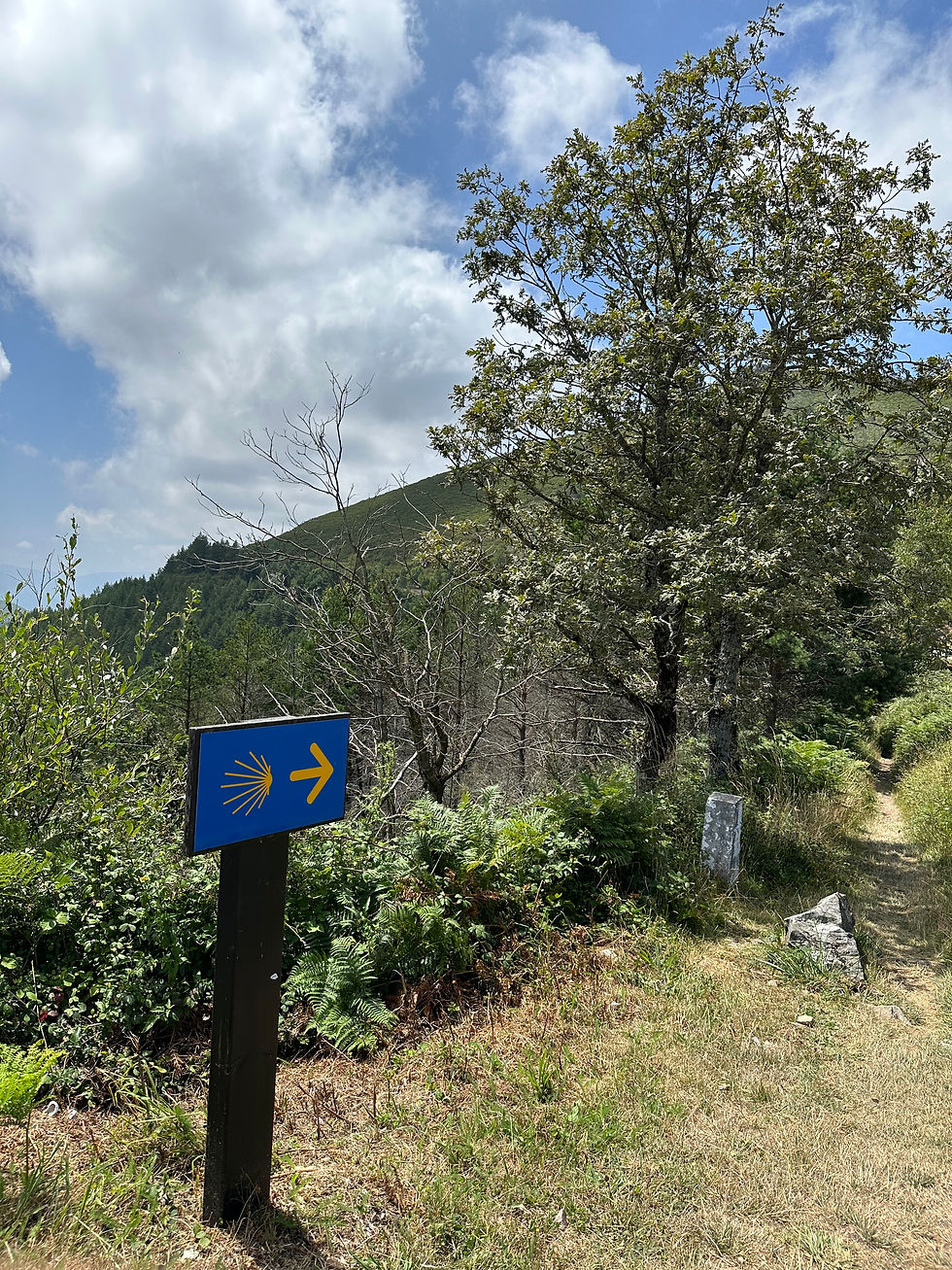
Useful technology: Download the " Buen Camino" app . It's probably one of the best apps available for pilgrims. It shows up-to-date stages, elevation profiles, services, and accommodations. Personally, I've always preferred to follow the yellow arrows and rely on directions from other pilgrims or locals. However, if you need it, the app is truly invaluable and offers very useful information on hostels, available beds, and alternative routes.
Don't just look at the kilometers: When planning a stage, don't let the distance fool you. Ten kilometers on flat ground can be a walk in the park. Ten kilometers with eight hundred meters of elevation gain are a different story. Take the Camino Primitivo: the total kilometers are shorter than the Camino Francés, but the constant climbs and descents put a strain on your legs. Always look at the elevation, not just the kilometers.

Recommended reading
These are entirely personal choices, but they are books that have helped make my Journey more intense and, in some ways, more romantic.
Paulo Coelho's The Way of St. James . A classic. Without spoiling anything, trying to relive some of the novel's atmosphere during my journey added an almost mystical edge to the experience.
The Salt Trail by Raynor Winn. Lesser-known, but extraordinary. I read it while hiking, and it inspired many reflections.
The Magical Guide to the Camino de Santiago by Francisco Contreras. It was my practical guide before leaving and, along with the Buen Camino app, helped me build a concrete vision of the journey.
An (any) updated guidebook dedicated to the route you've chosen. If you like having a physical map in your hands, it can still be a valuable tool today.
Last piece of advice, entirely personal: carry a small journal with you. Writing down the miles you've traveled, the people you've met, and the thoughts of the day is one of the most beautiful gifts you can give your future self. Rereading it, months or years later, has something profoundly magical.
Last but not least: plan, but stay flexible
Having a plan is important, especially if you have limited time and flights to keep. Knowing where you're supposed to end up gives you direction. However, once you've set out, try to leave room for the unexpected. The Camino is beautiful precisely because it escapes your control. You might meet people with whom you decide to stay an extra day. You might discover an alternative route that calls to you more than the planned route. Or your body might simply be telling you to slow down.
And that's okay. You're walking.
Don't worry about booking every single night months in advance, except during particularly busy periods. Municipal and parish hostels are cheap, often very cheap, and private hostels are generally affordable.
Go with the flow. Don't be afraid to go it alone. Be flexible.
Having a plan helps the mind, but learning to let it go, when necessary, is one of the most beautiful lessons the Camino can teach. Just like a mosaic: every encounter, every detour, every struggle, and every surprise seem like scattered pieces with no meaning. Then you arrive in Santiago, you look back, and discover that everything has fit together perfectly. And only then can you see the complete picture (perhaps).
Buen Camino!


